
Why Laptops and Phones Cost More This Year, and What Black Friday Actually Saves You
Something odd happened to gadget prices in 2026. The sales are still there and the marketing has not changed, but the price a laptop or phone now starts at has crept up, and the model you would have bought two years ago sits a tier higher today. The reason is not screens or cameras. It is memory.
This piece explains what changed, why cheaper devices are hit hardest, and what it means if you were planning to buy in the Black Friday sales on Friday 27 November.
Why memory became the expensive part
Every laptop and phone needs two kinds of memory: DRAM, which is the working memory that decides how many apps stay open, and NAND flash, which is the storage. For years both were cheap commodity parts, a small line in the build cost of a device.
AI data centres changed that. The same factories that supply consumer memory sell to server builders who will pay more per wafer, so less capacity is left for phones, laptops and consoles. IDC’s forecast for 2026, widely reported at the time, put DRAM supply growth at only about 16% against demand that was rising much faster.

The share of the bill that memory takes is no longer small. Intel’s chief executive Lip-Bu Tan said in September 2026 that memory can account for up to 80% of the cost of a budget phone or laptop, according to reports of his remarks. That single figure explains most of what you are seeing at the checkout.
Apple has been caught the same way. Trade reporting in November 2026 put the rise in its manufacturing bill at around $33 billion, with component costs threatening margins through the holiday quarter and into 2027. Samsung has said the memory squeeze gets worse in 2027 rather than better, and some analysts have talked about shortages running to the end of the decade.
Why cheap devices feel it first
A £1,200 laptop has room to absorb a component increase. A £400 laptop does not. At the bottom of the market, margins are thin, advertising budgets are small and a jump in the price of memory has to come out of one place: the specification, or the price you pay.
That is why the cheapest 2026 models often hold their price while quietly dropping from 16GB of memory to 8GB, or moving to slower storage. It also explains the stranger reports: in November 2026 the trade press described smartphone makers buying memory back from old devices and re-soldering it onto new boards to keep budget handsets affordable, a process known as reballing. Whether that reaches the UK in volume is unclear, but it tells you how tight supply is.
The first sign of relief
In mid-November, trade reporting put NAND flash spot prices around 20% lower than a fortnight earlier, as weak consumer demand and extra Chinese production met a market that had run very hot. Spot prices are the wholesale end of the market, where traders buy small volumes, not the price a brand pays for a million chips.
So this is a signal, not a discount. Manufacturers buy memory on contracts agreed months ahead, which is why retail prices lag wholesale moves in both directions. If the slide continues, storage-heavy devices such as budget laptops, SSDs and memory cards are where you would notice it first, some time in the first half of 2027.
What this means for Black Friday
Black Friday lands on Friday 27 November this year, with Cyber Monday on 30 November. Both dates matter for a reason that has nothing to do with marketing: the discounts are calculated from list prices that have already risen. A genuine 15% cut on a higher starting price can still be more than the same class of device cost last year.
Consumer groups have warned for years that a discount label proves nothing on its own. Which? has repeatedly found deals on sale at prices that were lower earlier in the year, which is why the only reliable check is price history for the exact model number.

- Match the model number, not the name. Retailers use different codes for slightly different specifications, and the cheaper one is usually the one in the advert.
- Check the memory and storage in the small print. A 2026 bargain with 8GB of memory and 256GB of storage is not the same product as last year’s 16GB model at the same price.
- Look up the price history. Free trackers such as CamelCamelCamel and PriceSpy, and the price history built into some retailers, show whether today’s price is genuinely the lowest.
- Watch the warranty and the seller. A large discount from a marketplace seller with no UK returns address is not a saving you can rely on.
- Ignore the AI badge. Nearly everything on sale now is described as AI something. It rarely tells you anything about the memory inside.
Buy now, or wait for 2027?
There is no single answer, because the two halves of the market are moving in different directions.
| Your situation | Sensible move |
|---|---|
| You need a working laptop or phone now | Buy on a verified price drop, and prioritise memory over cosmetic upgrades. Waiting assumes prices fall, and device prices fall slowly even when components do. |
| You can wait six months | Keep the current device going and watch NAND and DRAM spot prices. Storage-heavy buys are the most likely to soften. |
| You are buying a gift for December | Buy in the Black Friday window, before stock of the cheaper configurations runs out, and keep the receipt for the extended return window. |
| You want a specific high-end model | Check the previous generation. The step-down model is where the real discount usually is, and the differences are often small. |
What to prioritise if you must buy
Because memory is the scarce part, memory is the specification worth paying for. Sixteen gigabytes of working memory and 512GB of storage will keep a laptop comfortable for years, while 8GB and 256GB will feel tight within a year of normal use. On a phone, buy the storage tier above the one you think you need, since it cannot be added later.
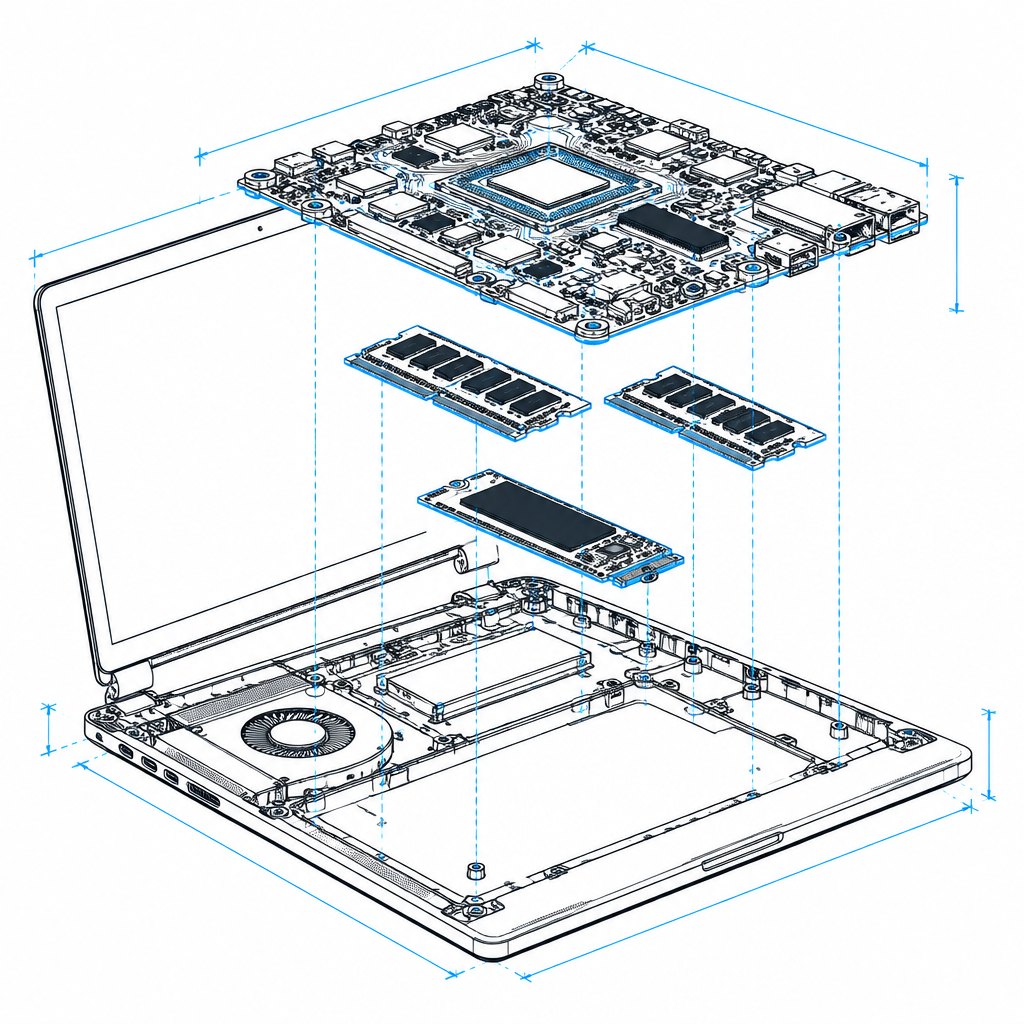
Check whether the memory is soldered or socketed. A laptop with two memory slots can be given more memory later, when prices ease, which makes it a better buy in a market like this one. A sealed machine is fixed for life.
Two useful pieces of context before you shop. Our explainer on what on-device AI actually changes covers why local AI features need memory to work, which is why the AI labels and the memory squeeze arrived together. And if your current device still works, our piece on software updates is a cheaper way to buy yourself another year: security patches and a clean install often do more for a slow machine than a new one would.
The short version
Memory stopped being cheap, AI demand took the supply, and the price you pay for a laptop or phone followed. Black Friday discounts are real in places, but they are calculated from inflated list prices, so a price history check matters more than any banner. If you need a device now, buy memory over extras and check the model number. If you do not, wait and watch storage prices in the new year.
Sources consulted: IDC supply forecasts, reported remarks from Intel and Samsung, November 2026 trade reporting on NAND spot prices, Apple component cost reporting, and Which? guidance on discount pricing.