
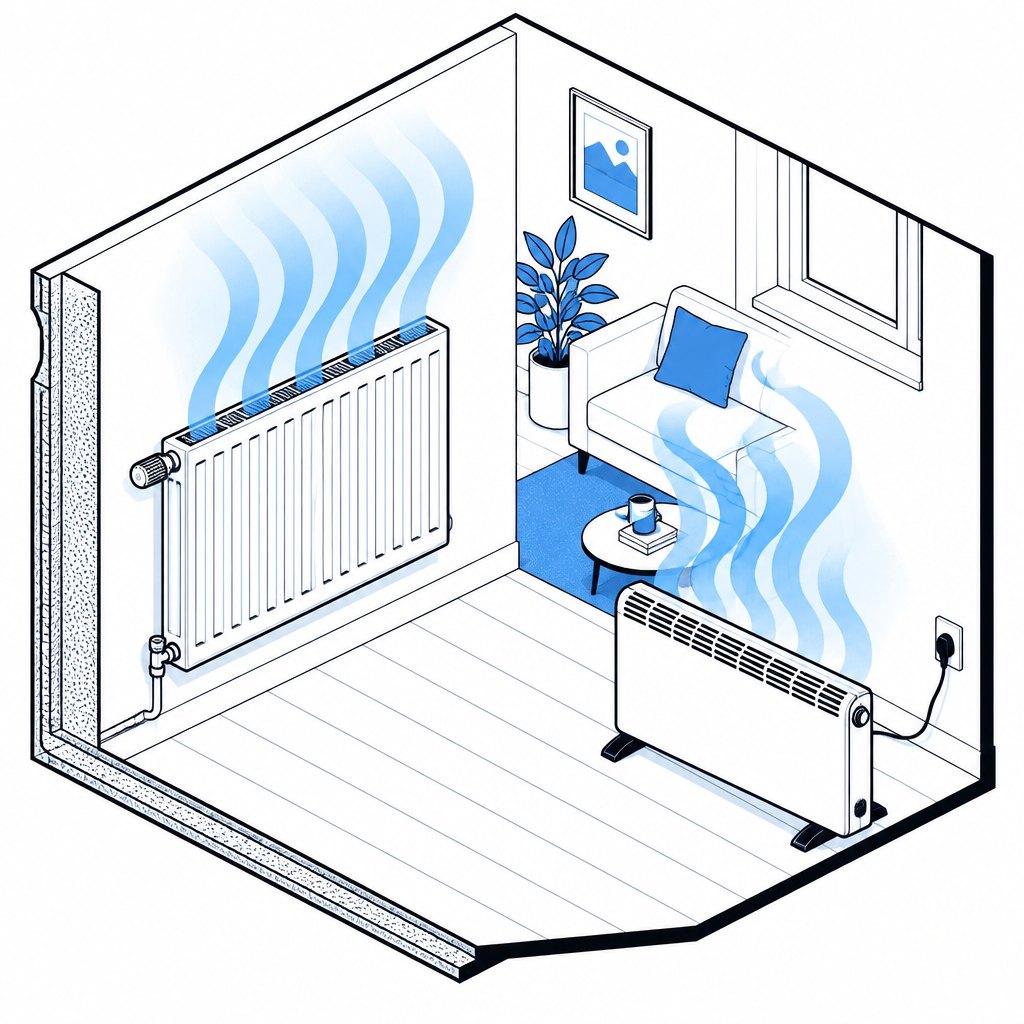
Electric Heaters vs Central Heating: What Each Really Costs This Winter
Every winter the same question comes back, and every winter it gets more expensive to answer: is it cheaper to put the heating on, or to sit in one room with an electric heater? Under the price cap that runs from 1 October to 31 December 2026, a typical household pays about £1,723 a year, with electricity at 26.32p per kilowatt hour and gas at 7.97p. That gap is the whole story.
Here is the arithmetic, without the sales pitch, plus the cases where the “wrong” answer is actually the right one.
The number that decides it: cost per kWh of heat
Every heater converts something into heat, and the useful comparison is what a kilowatt hour of delivered heat costs. For a plug-in electric heater the answer is simple, because all of the electricity becomes heat: one unit in, one unit of heat out, at 26.32p.
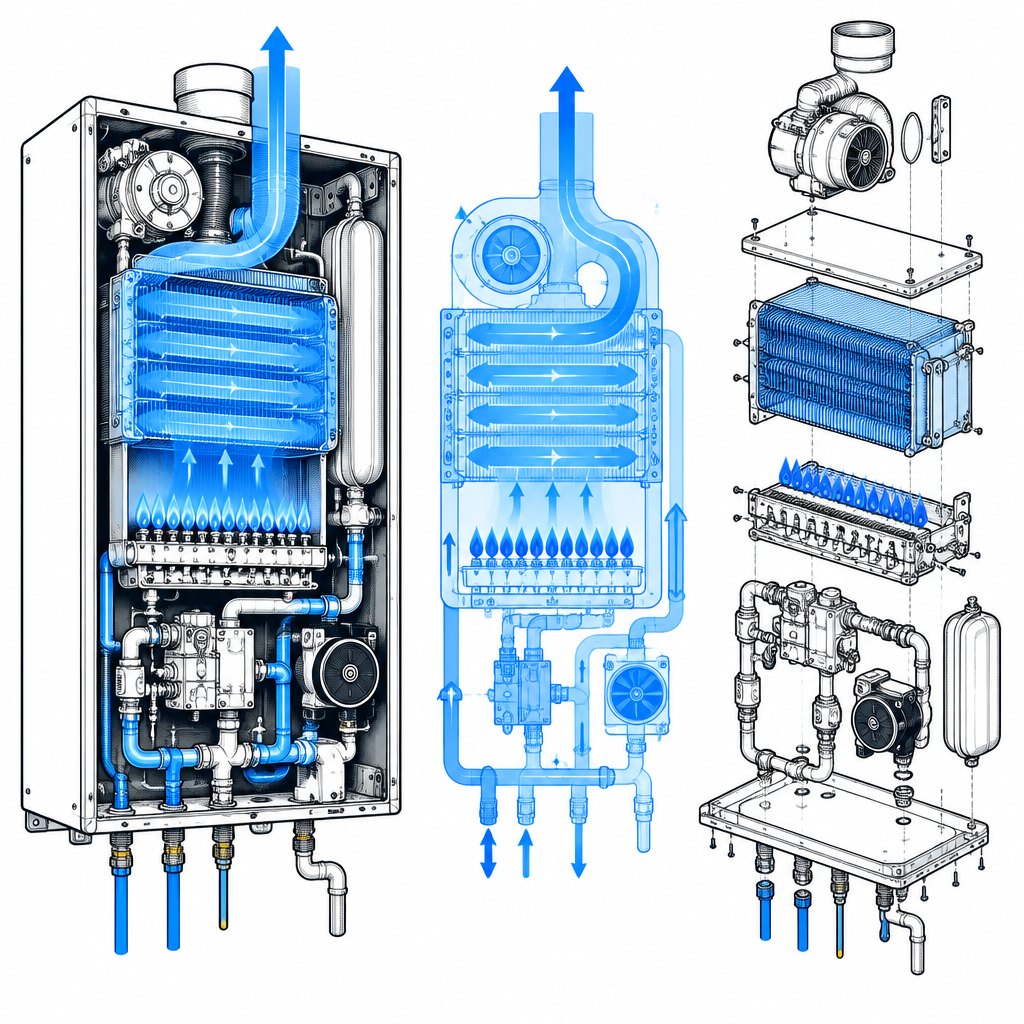
Gas is different because a boiler loses some heat up the flue. A modern condensing boiler is around 90% efficient, so 7.97p of gas buys roughly 0.9 kWh of heat, or about 8.9p per kWh. A well set up heat pump beats that, because it moves heat rather than making it: at a coefficient of performance of 3, one unit of electricity delivers three units of heat, so 26.32p buys three kWh, or about 8.8p each.
What that looks like in a real home
The percentages hide how quickly the small numbers add up, so here are worked examples for an ordinary evening. They assume the cap rates above and a reasonably insulated home.
| What you run | Power used | Cost |
|---|---|---|
| 2kW electric convector heater, one hour | 2 kWh | 52.6p |
| Same heat from a 90% efficient gas boiler | about 2.2 kWh of gas | about 17.7p |
| Electric blanket, one hour | 0.1 kWh | 2.6p |
| 300W dehumidifier, eight hours | 2.4 kWh | 63p |
| 1.5kW air fryer, 20 minutes | 0.5 kWh | 13p |
| 2.5kW oven, 45 minutes | 1.9 kWh | 49p |
| Heat pump, one kWh of heat at COP 3 | 0.33 kWh | 8.8p |
Read down that table and the pattern is obvious: electric resistance heating costs about three times as much as gas for the same amount of warmth. A single 2kW heater running for four hours in the evening costs roughly £2.10. The same money spent on gas buys about 24 kWh of heat, which is enough to run a whole small house for a good part of the day.
That comparison is also slightly unfair, which brings us to the exceptions.
When an electric heater is the sensible choice
Gas is cheaper per unit of heat, but only if the boiler is heating something you actually want warm. A boiler that fires up to warm one small room also pushes heat into every radiator on the circuit, including the rooms nobody is in. That is where plug-in heating earns its place.
- One person, one room, short bursts. Half an hour in a study in the morning is 13p with a 1kW heater. Heating a whole house for the same period is not.
- You have no gas supply, or the boiler is broken. This stops being a cost comparison and becomes a necessity.
- You want local warmth rather than warm air. An electric blanket at 2.6p an hour, or a heated throw, heats the person rather than the room and costs a fraction of either option.
- The room is small and well insulated. A 700W oil-filled radiator in a box room can hold a comfortable temperature without cycling hard.
What does not work is using electric heaters as a substitute for running the central heating all winter. That is where bills reach three figures in a month.
Heat pumps in plain terms
A heat pump is the one electric heating technology that closes the gap, because it does not generate heat, it moves it. The coefficient of performance is the exchange rate: 3 means three kilowatts of heat for every kilowatt of electricity.
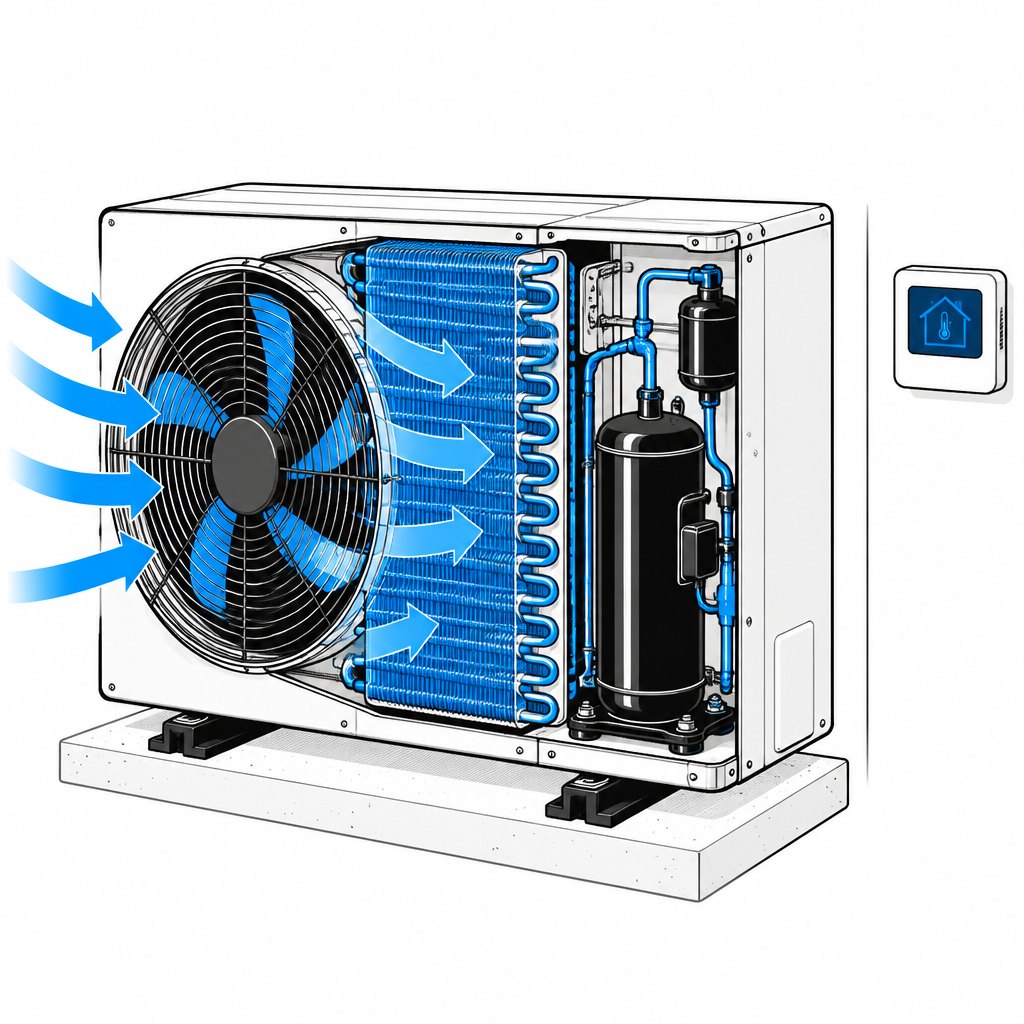
That number is not fixed. It falls as the outside air gets colder and as the water in your radiators gets hotter. A system designed to run at lower flow temperatures, with larger radiators and decent insulation, will sit in the range of 3 or better for most of the winter and cost roughly gas parity. A badly set up system running at 65C flow temperatures on undersized radiators will sit nearer 2, and cost more than gas. Grants are available towards installation under the Boiler Upgrade Scheme; check the current amount on gov.uk, as the figures change.
Five changes that matter more than which heater you own
Once the fuel is chosen, the controls decide the bill. Turning a thermostat down by one degree is often quoted as cutting heating use by around a tenth, which is worth more than switching heaters. Bleeding radiators, setting thermostatic valves room by room, and closing doors all cost nothing.
Timing beats temperature. A boiler that runs for two hours in the morning and three in the evening, warming a house that is occupied, uses less gas than one left on low all day in a draughty house. And drying washing indoors without ventilation does not save money, it just puts the moisture into the walls; a dehumidifier at 63p for eight hours is usually the cheaper way to deal with it.
Where the money actually goes
Before blaming the heater, it helps to know the shape of the bill. Under the current cap the standing charge is about 29.68p a day for electricity, which is roughly £9 a month before a single appliance is switched on. Hot water is next, and then space heating. A household that heats two rooms and takes short showers can spend less than one that heats an empty house and runs a long bath, whatever kinds of heater are involved.
A smart meter display makes this visible in a way that an annual bill never does: run the heater for an hour, note the cost, then run the boiler for an hour on a cold evening and compare. Ten minutes of that is worth more than any online calculator, including this one, because it uses your home rather than an average.
If you are choosing a heater to buy
Convector, oil filled, halogen, ceramic, infrared, “low energy”: all of them turn electricity into heat at the same rate of exchange. None of them is more efficient than another, because 100% is already the ceiling. What differs is how the heat reaches you and how well the device holds a temperature.
- Convector heaters are cheap and heat a room fast, then lose it fast. Good for a short burst.
- Oil filled radiators take longer to warm up, hold heat after switching off, and are quieter. Better for a room you sit in for hours.
- Halogen and infrared warm surfaces and people rather than air, which suits a cold bathroom or a workshop and does nothing for a room you are not sitting in.
- Anything claiming to cut running costs by a percentage is describing a thermostat, a timer or a smaller element, not a breakthrough. Buy on control and build quality.
Whichever you choose, get one with a thermostat and a timer. A 2kW heater left on because nobody turned it off costs more in an evening than a well controlled one costs in a week.
If you are shopping for one in the sales on 27 November, our guide to why gadget prices rose this year and what Black Friday actually saves explains how to tell a real discount from a higher list price.
The short version
Per unit of heat, gas costs about 8.9p, a heat pump about 8.8p and a plug-in electric heater 26.32p. Use gas for the house, use electric heaters only for the one room you are in, heat the person before the room with a blanket or throw, and spend ten minutes on the radiator valves and the thermostat. The next price cap is announced in late November and applies from January, so the exact rates will move; the ratio between gas and electricity rarely does.
Sources: Ofgem price cap unit rates for 1 October to 31 December 2026, Energy Saving Trust guidance on heating controls, and gov.uk information on the Boiler Upgrade Scheme. Efficiency and coefficient of performance figures are typical values for a well installed system, not guarantees.