What Is Active Noise Cancellation (ANC), and Is It Worth Paying For?
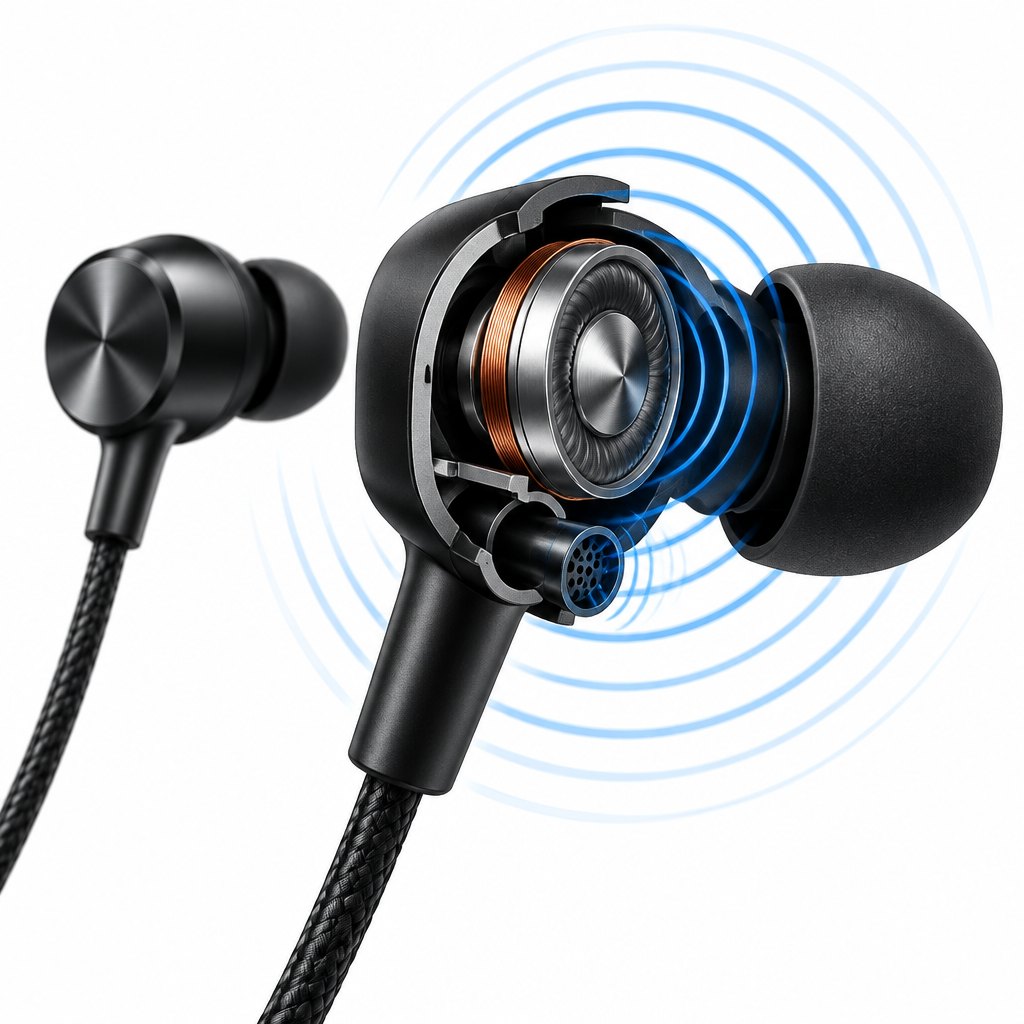
Quick answer: Active noise cancellation (ANC) uses small microphones on your earbuds or headphones to listen to outside noise, then plays an opposite sound wave that cancels it out. It works best on steady, low sounds like a bus engine, metro rumble, aeroplane cabin or office AC. It’s much weaker against voices, horns and sudden noises. If you commute daily or work in a noisy space, ANC is worth having; for quiet homes, good-fitting earbuds without ANC are fine.
How ANC works, in plain English
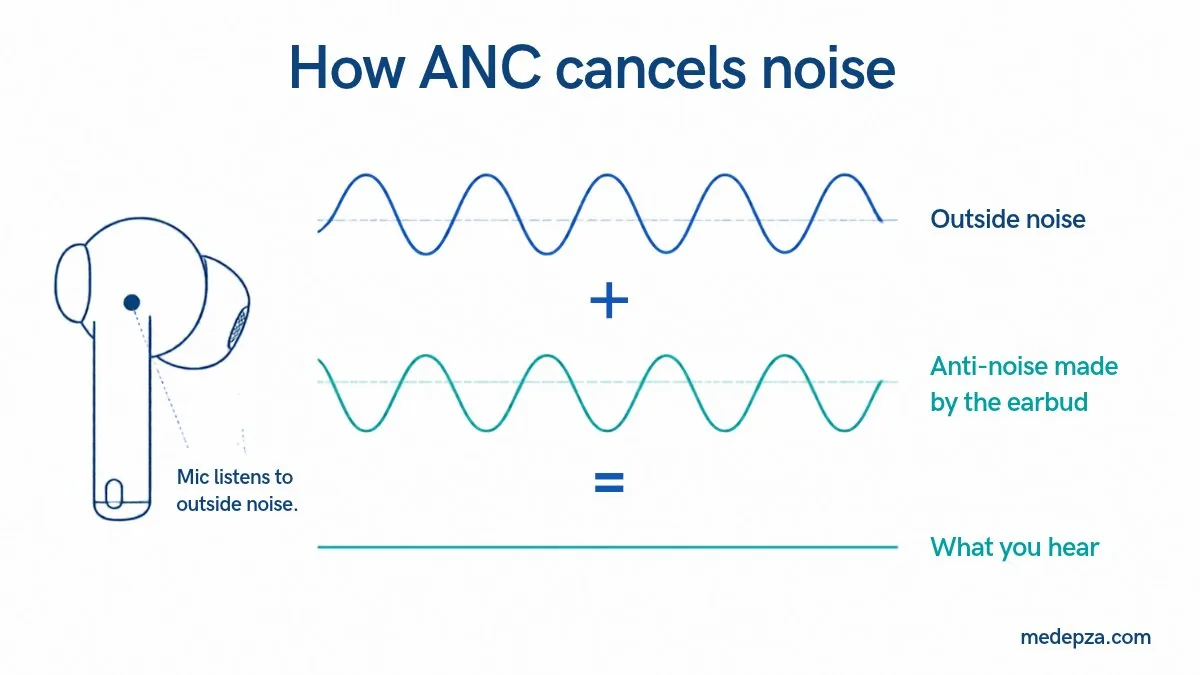
Sound travels as waves of air pressure: highs and lows. If you play a second wave that is the exact mirror image, with a high wherever the first has a low, the two cancel each other out. That’s the whole idea behind ANC.
- A microphone on the outside of each earbud picks up the noise around you.
- A small chip calculates the opposite wave in a fraction of a millisecond.
- The speaker plays that “anti-noise” along with your music.
- Many earbuds add a second microphone inside the ear to check what’s left and correct it.
What reaches your ear is your music with much of the background hum removed.
What ANC is good and bad at

| Sound | How well ANC handles it |
|---|---|
| Bus, train and aeroplane engines | Very well |
| Office AC and fan hum | Very well |
| Traffic rumble | Well |
| People talking nearby | Partly |
| Horns, dogs barking, a baby crying | Poorly |
| Wind | Can make it worse on cheaper models |
ANC needs time to “learn” a sound, so steady noise is easy and sudden noise is hard. For the rest, the physical seal of your ear tips does most of the work. This is called passive isolation, and it’s why the right ear-tip size matters so much.
“Up to 50dB ANC”: what the number means
Brands quote a maximum noise reduction in decibels (dB). It’s a best-case figure, usually measured on low frequencies in a lab. Two things to remember:
- Decibels aren’t linear. Every 10dB of reduction makes a sound seem roughly half as loud, so 30dB vs 40dB is a real difference, but only on the sounds ANC handles well.
- Real-world results depend on fit. A loose earbud with “50dB ANC” can block less than a well-fitted one rated 35dB.
Treat the number as a rough guide and read reviews that describe how the earbuds cope on a bus or in an office.
ANC vs ENC: not the same thing
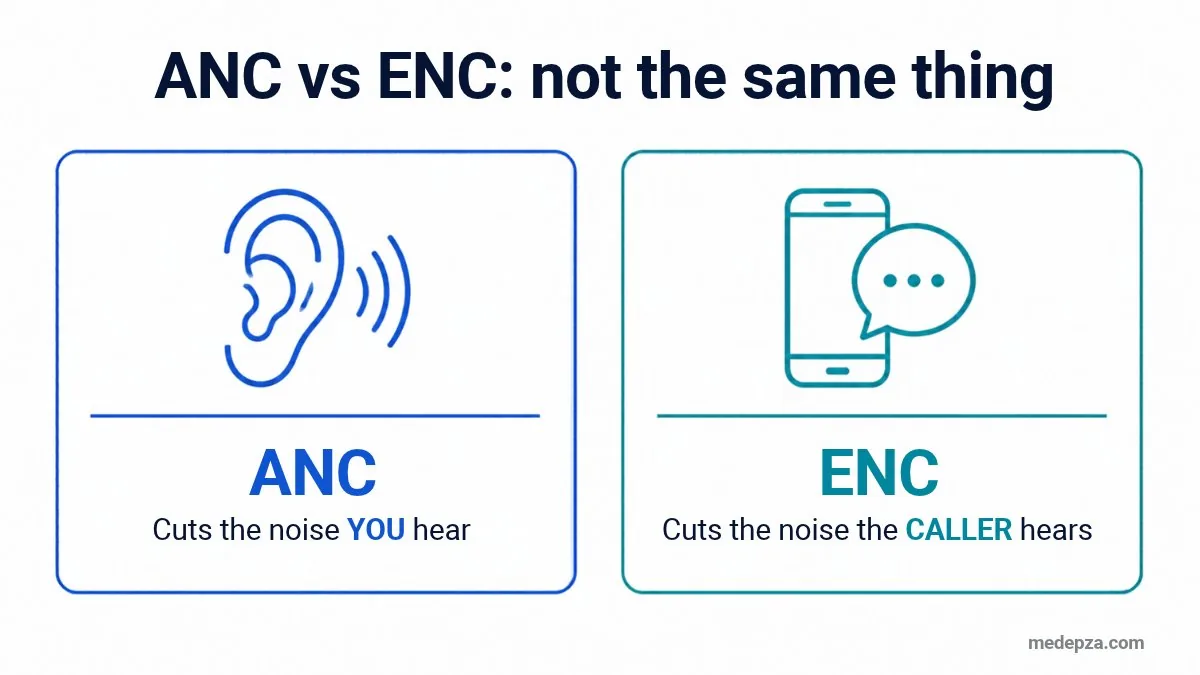
| ANC (active noise cancellation) | ENC (environmental noise cancellation) | |
|---|---|---|
| What it does | Reduces the noise you hear | Reduces the noise the other person hears on a call |
| Where it helps | Listening to music, podcasts, calls | Your voice on calls |
| Common on | Mid-range and premium earbuds | Most earbuds, even budget ones |
Many budget earbuds advertise “noise cancellation” when they only have ENC for calls. Check the spec sheet for “ANC” specifically.
Transparency mode: the other half of ANC
Most ANC earbuds also have a transparency or ambient mode, which uses the same microphones to let outside sound in. Use it when walking near roads, at railway stations, or when someone talks to you, so you don’t need to take an earbud out. For safety, avoid full ANC while walking or cycling in traffic.
Does ANC affect sound or battery?
- Battery: ANC uses extra power. Expect noticeably less battery life per charge with ANC on.
- Sound: good ANC lets you listen at a lower volume, which is easier on your ears over time.
- Comfort: some people feel slight pressure, like being on a plane, when ANC is strong. Lowering the ANC level usually helps.
Is ANC worth paying for?
| You… | ANC worth it? |
|---|---|
| Commute by metro, bus or train every day | Yes |
| Work in an open office or busy home | Yes |
| Fly often | Yes |
| Mostly listen at home in a quiet room | Not essential |
| Exercise outdoors near traffic | Use transparency mode instead |
In 2026, decent ANC is available in earbuds around ₹3,000 to ₹4,000. See our best TWS earbuds under ₹4,000 for current picks.
Related guides
- Best Earphones Under 1000 in India (2026): Wired and IEM Picks With Good Bass
- Best Wired Earphones Under 500 in India (2026): Bass, Mic and USB-C Picks
- Best Home Theater and Soundbar Systems in India (2026): 2.1 and 5.1 Picks
Common questions
Can ANC damage your ears?
No. ANC doesn’t add loud sound; it reduces background noise, so you usually listen at lower volume, which is better for your hearing.
Does ANC work without music?
Yes. You can switch ANC on with nothing playing to quiet a noisy room, which some people use for focus or sleep.
Why does ANC make a faint hiss?
Cheaper ANC circuits can add a soft background hiss. It’s normal and usually disappears once music plays.
The bottom line
ANC is excellent at removing steady background noise like engines and AC hum, and much weaker against voices and sudden sounds. Get a good fit first, then pay for ANC if your day includes noisy commutes or workplaces.