Inverter vs Non-Inverter AC: Which Is Better for Indian Homes?
Quick answer: For almost every Indian home, an inverter AC is the better choice. It adjusts its compressor speed instead of switching fully on and off, so it uses noticeably less electricity, keeps the room at a steadier temperature and runs more quietly. A non-inverter (fixed-speed) AC only makes sense if you’ll use it rarely and want the lowest upfront price.
The simple difference
Think of a car in city traffic.
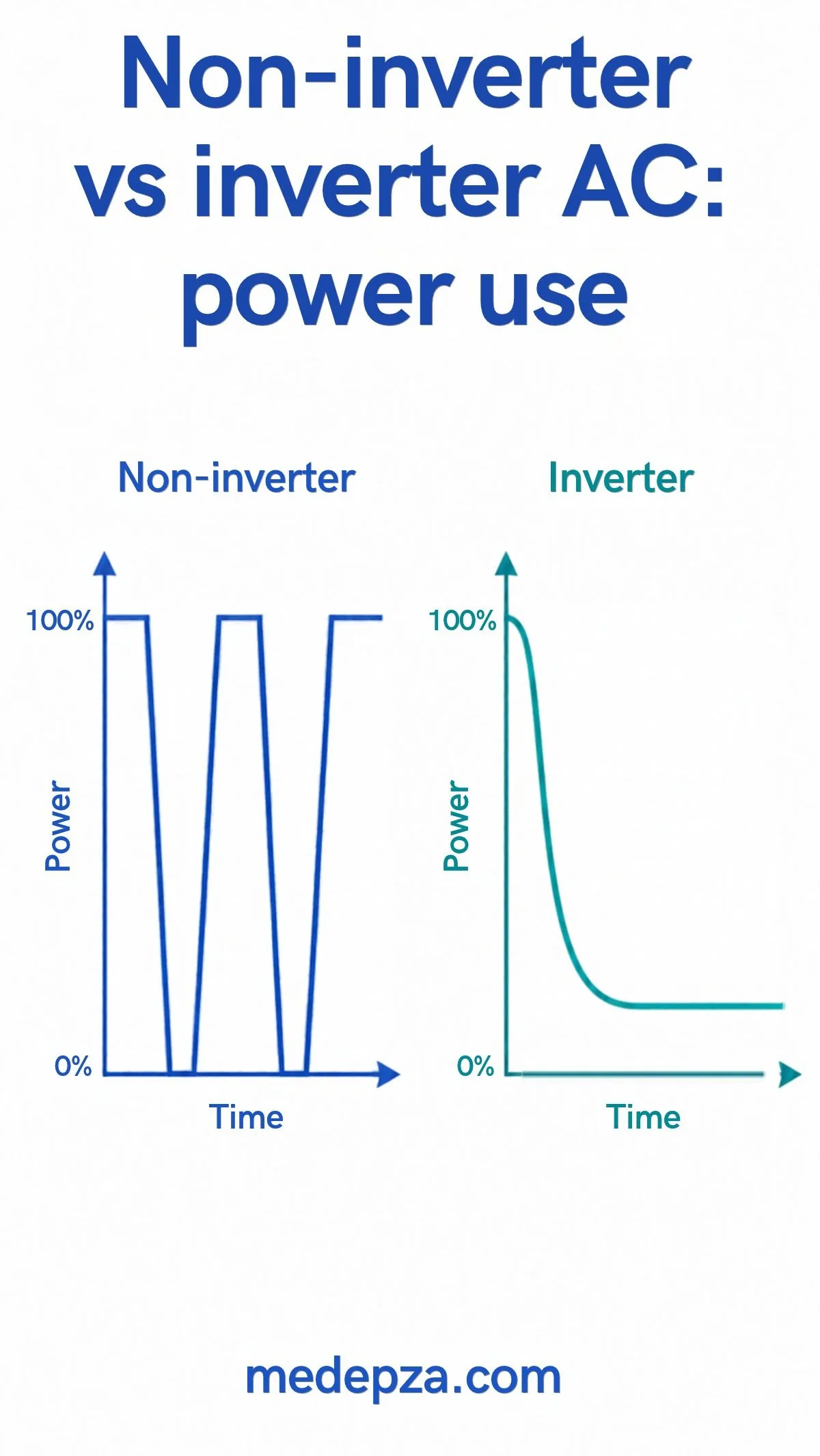
- A non-inverter AC is like a driver who either floors the accelerator or slams the brakes. The compressor runs at full power until the room hits the set temperature, then switches off completely. When the room warms up, it starts again at full power.
- An inverter AC is like a driver who eases off and keeps a steady speed. After cooling the room, the compressor slows down and keeps ticking over just enough to hold the temperature.
Starting a compressor from zero takes a lot of power. An inverter avoids most of those restarts, which is where the savings come from.
Side by side
| Inverter AC | Non-inverter AC | |
|---|---|---|
| Compressor | Variable speed | On/off, fixed speed |
| Electricity use | Lower, especially with long daily use | Higher |
| Temperature | Steady, within about a degree | Swings up and down |
| Noise | Quieter once the room is cool | Louder start-stop cycles |
| Upfront price | Higher | Lower |
| Repairs | Electronic boards cost more to replace | Simpler, cheaper parts |
| Star ratings available | Up to 5-star | Usually lower ratings |
How much does an inverter actually save?
It depends on how long you run the AC and how hot your city is. Savings are biggest when the AC runs for many hours, because that’s when the compressor spends most of its time running slowly instead of restarting. For an AC used 6 to 8 hours a night through summer, an efficient inverter model can cut your cooling bill by a third or more compared with an old fixed-speed unit. For an AC used for an hour now and then, the difference is small.
The easiest way to compare is the ISEER number on the BEE label. Higher ISEER means less electricity for the same cooling. Most high-ISEER ACs sold in 2026 are inverter models.
Comfort: the benefit people don’t expect
Because a non-inverter AC switches off and on, the room keeps going from slightly too cold to slightly too warm. An inverter holds the temperature steady, so you can set it a degree or two higher, say 25°C or 26°C, and still feel comfortable. Each degree higher saves electricity too.
What about voltage problems?
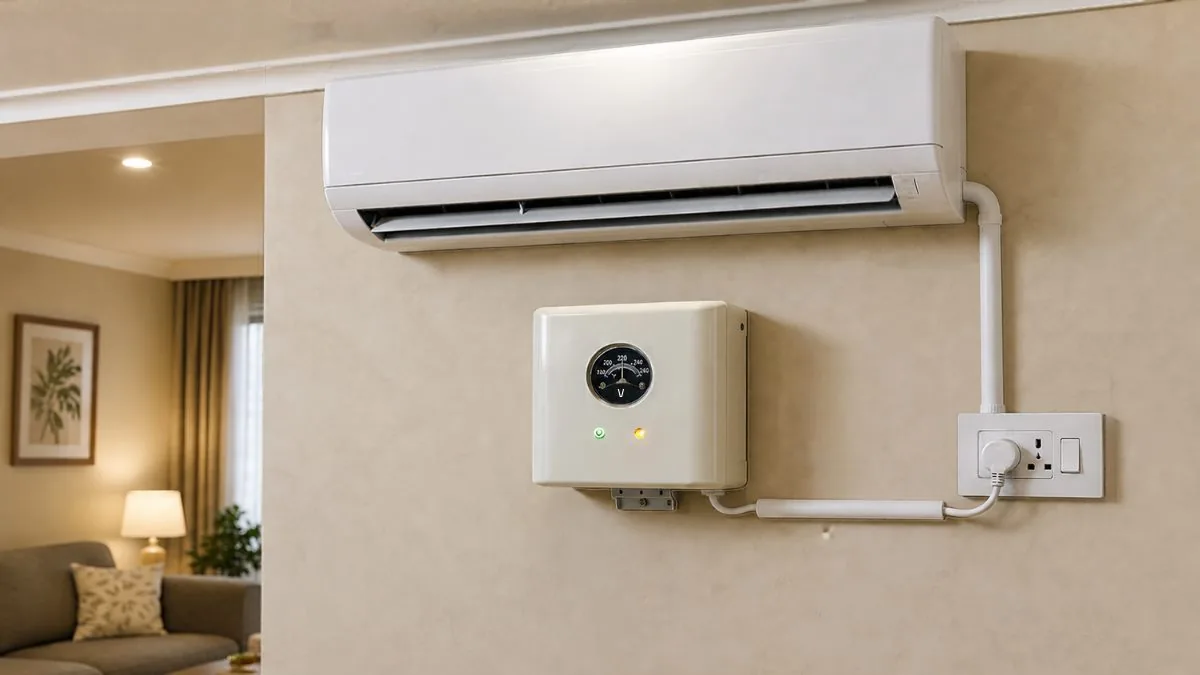
Many Indian areas see voltage drops and spikes. Most modern inverter ACs are designed to work across a wide voltage range without a separate stabiliser. Check the “operating voltage range” on the spec sheet. If your area has frequent severe fluctuations, a stabiliser rated for your AC is still a good idea. It protects the electronic control board, which is the most expensive part to replace.
The downside: repair costs
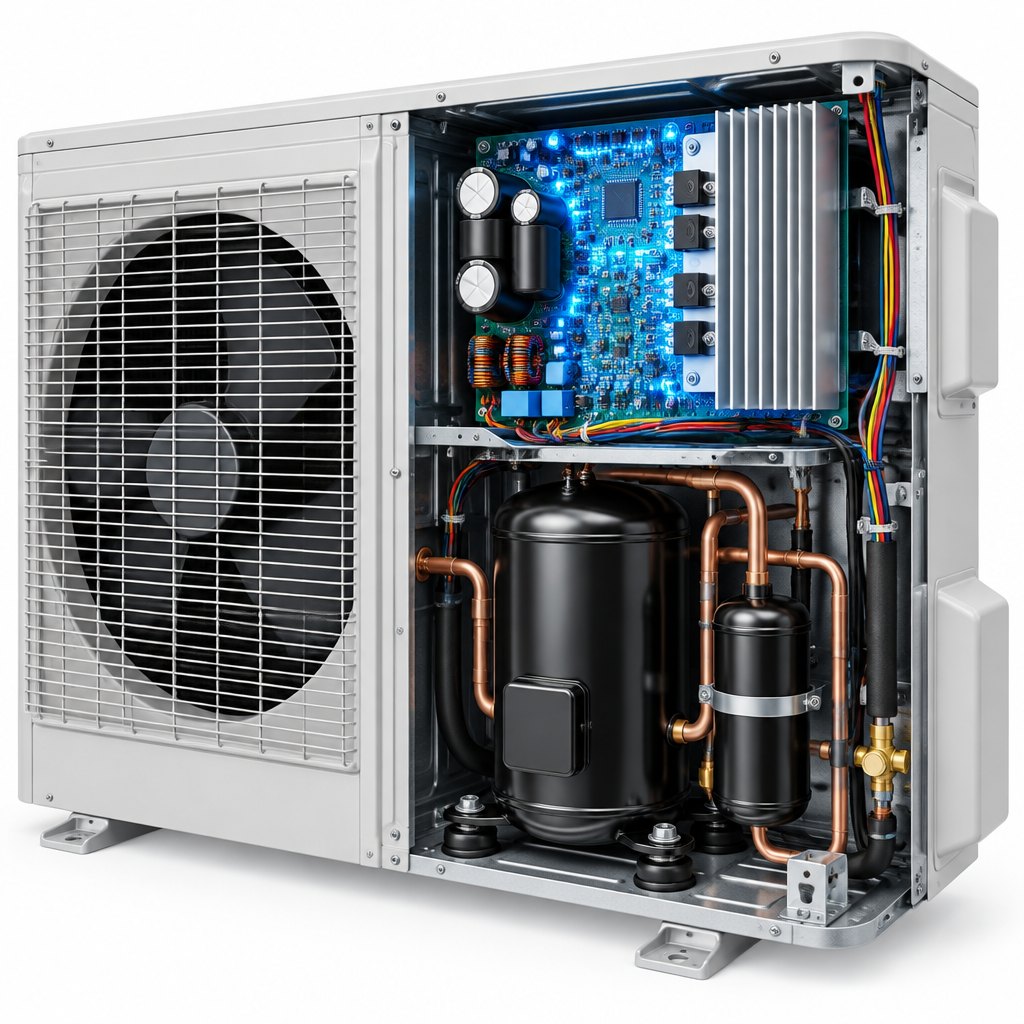
An inverter AC has an electronic control board (the PCB) that manages the compressor speed. If it fails, often because of a power surge, the replacement costs more than parts on a fixed-speed AC. To reduce this risk:
- Choose a brand with good service in your city.
- Check the warranty on the PCB, not just the compressor. Some brands offer extended PCB cover.
- Use a stabiliser or surge protection if your power supply is unreliable.
When a non-inverter AC still makes sense
- A guest room or office used a few times a month
- A very tight budget where the lower price matters more than the bill
- Places with severe power fluctuations and no stabiliser, where a simpler unit may survive better
Even then, compare prices. In 2026, entry-level inverter ACs often cost only a little more than non-inverter models.
Related guides
- Best 1 Ton AC in India (2026): Split and Window Picks for Small Rooms
- Best 1.5 Ton Split AC in India (2026): Inverter Picks Under the New BEE Ratings
- Best 2 Ton Split AC in India (2026): Picks for Large Rooms and Halls
Common questions
Is an inverter AC worth it for 4 to 5 hours a day?
Usually yes. Even at moderate use, it saves money over the AC’s life, which is often 8 to 10 years, and it’s more comfortable.
Do inverter ACs cool slower?
No. They start at high speed to cool the room quickly, then slow down to maintain the temperature.
Does an inverter AC work on a home inverter (battery backup)?
A home inverter or UPS can run an AC only if it’s large enough. Most home inverters are sized for fans and lights, not ACs. Check with your inverter supplier before trying.
What is a dual inverter AC?
It’s a brand name, mainly LG’s, for an inverter compressor with two rotary parts, designed for smoother and quieter running. The basic benefit is the same as any inverter AC.
The bottom line
Choose an inverter AC unless you’ll barely use it. Compare models by ISEER, check PCB warranty and local service, and size it correctly for the room. Our guide on what size AC you need helps with that last step.